
"Another Mark V Bit the Dust"
Part 3 of "The Best 'Little' Tank Company in the E.T.O."

Part 1
Part 2
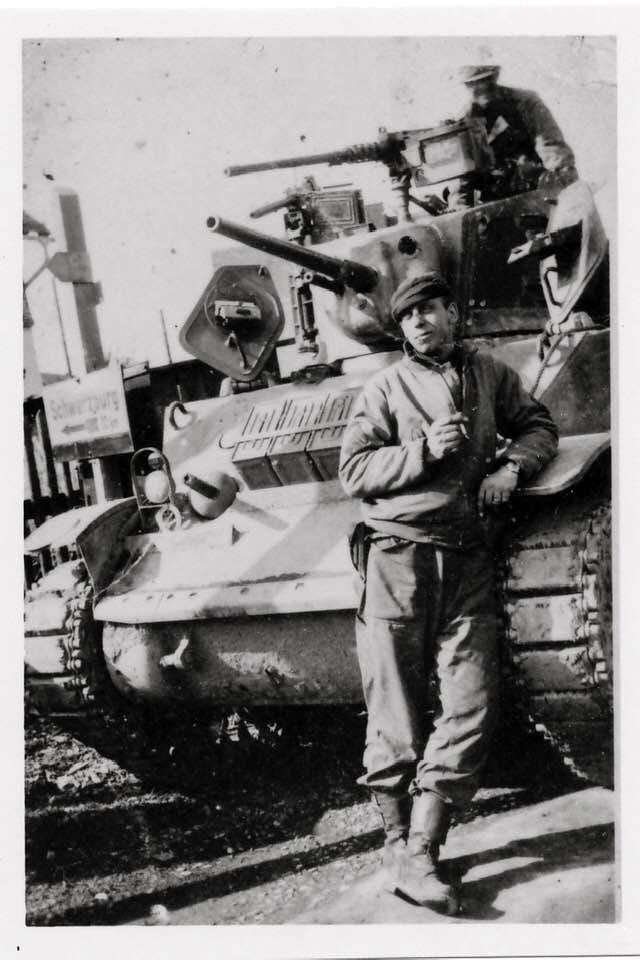
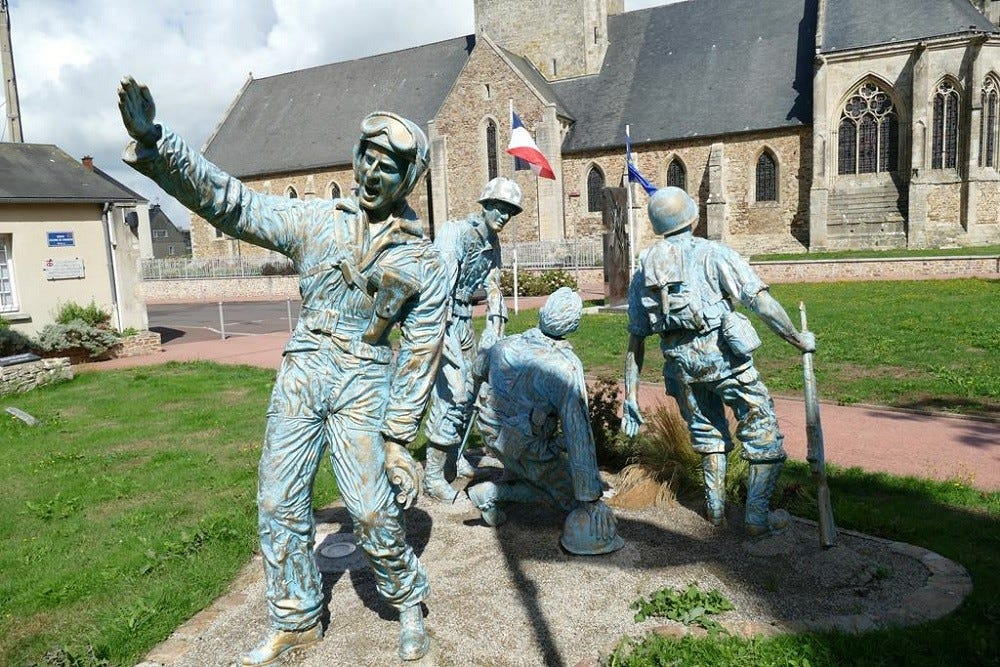
It’s easy to see why the importance and accomplishments of “little” D Company of the 712th Tank Battalion have been overlooked by historians, including myself. The victories and defeats of the 33-ton Sherman tanks of A, B and C Companies and the 105-millimeter assault guns of Headquarters Company were proportionally more dramatic than those of D Company’s 17-ton Stuart tanks, although the losses were no less painful. During the battle for Seves Island in Normandy, for example, a B Company Sherman met a fate similar to that of Sergeant Charles Reynolds’ light tank (see Part 2), only in that case the heavier Sherman ran over an explosive device with the equivalent of several hundred pounds of TNT which shot the tank into the air, flipped it over, and killed all five crew members, one of whom, Sergeant Tullio Micaloni, was chosen to represent the 712th in the statue honoring the 90th Infantry Division in Perier. During the battle for Hill 122, also in Normandy, Lieutenant Jim Flowers of C Company lost all four of his tanks with nine crew members killed but not before rescuing an entire battalion of the 358th Infantry Regiment that was surrounded by German paratroopers and smashing through the enemy lines to lead K Company of the 358 off the hill.
In fact, although I possessed a copy of the D Company log, I had never read it through as I figured many of the entries were dry and lacked detail and names. I did, however, know that the log contained some names, as one of them was that of my father, even though he was in A Company, but more about that when I get to December of 1944.
It wasn’t until a few of weeks ago, when I was contacted by a woman who said her grandfather was in the 712th, that I took a closer look at the D Company log. Her grandfather’s name hadn’t come up in my interviews but according to a roster he was in D Company, so I told her I would see if I could find him. I scoured the log with no success, although Dale Albee’s note said some pages were missing, and sometimes it said crew members were injured without naming them.
What I realized, though, was that between the log and three extensive interviews and several shorter conversations I recorded over the course of several years, “little” D Company had a hell of a story to tell.
9 August 1944
The Company moved into an assembly area on the W. edge of Chaffeur-Notre Dame at 0300, and was instructed to be ready to move if necessary at 0500. Two of the four lost tanks had been recovered by the Company maintenance and made ready for use. Upon awakening, Tec. 4 Borden went through the hedgerow to cut limbs for camouflage and found 12 Germans asleep. Armed with an axe, he brought them in. During the day three final drives were pulled by the maintenance section. At 1830, the Company moved with the Battalion to an assembly area 2 miles N.E. of Le Mans.
10 August 1944
The Company remained in the assembly area all day and performed maintenance. The 1st Platoon was alerted to move at 0430 the following day to support the 90th Division Rcn. Troop on a movement N. of Le Mans, along the river, and on the 90th Division’s left flank.
Did I mention that D Company’s primary role was reconnaissance? As it was explained to me by Bill Doyle, a veteran of the company, because they were lighter and faster than the Sherman tanks of the line companies, their job was to go ahead until they were fired on, and then get the heck out of there while the bigger tanks took over.
A.P.O. 308, U.S. Army
22 August 1944
Subject: Company Journal
To: COMMANDING OFFICER, 712TH Tank Battalion
Ref.: Map of France 1/25000
The following is a daily journal of this organization from 11 August 1944 to 22 August 1944
11 August 1944
The 1st Platoon under Lt. Godfrey moved at 0430, joined the 90th Division Rcn. Troop, and moved as the Division’s left flank Rcn. To vicinity of St. Germain-de-la-Coudre. The roads were outposted on this move along the river. No enemy contact was made. The Company moved at approximately 1700 to the vicinity of Luce, France, into an assembly area.
12 August 1944
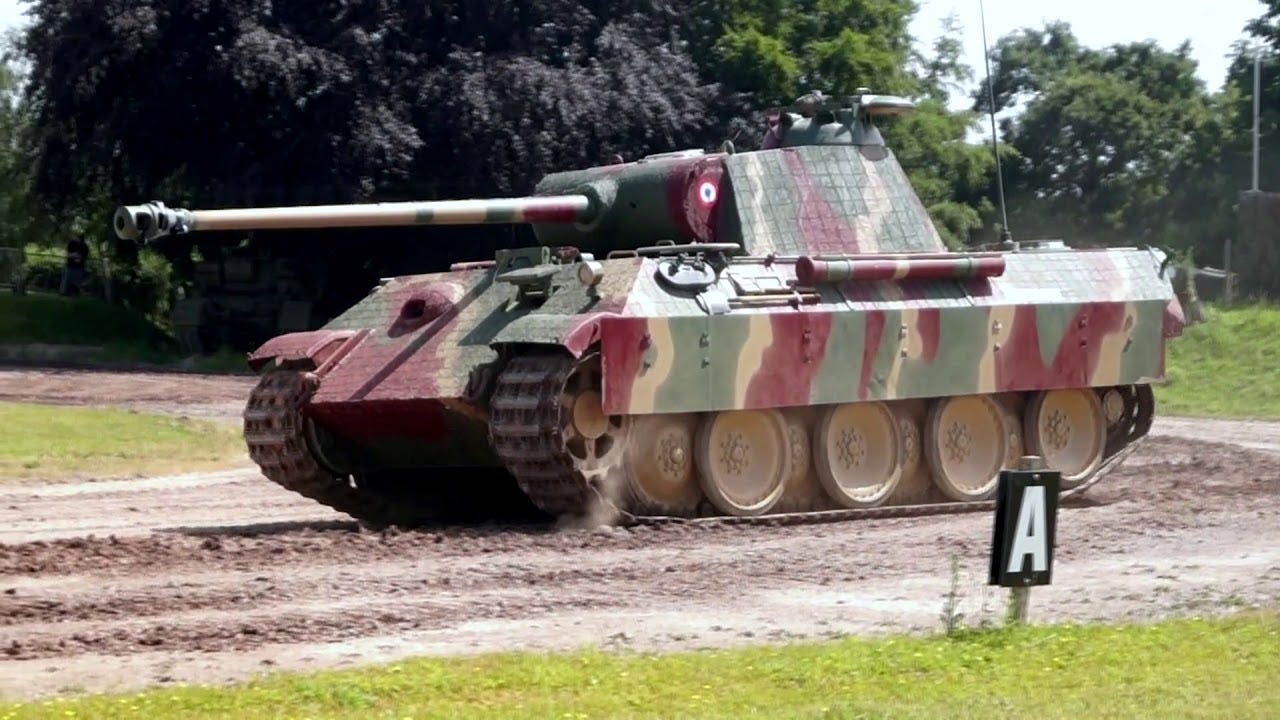
The 1st Platoon moved north through Alencon with the 90th Division rcn. Troop, moved through the French 2nd Armored Division, and met enemy resistance at a crossroad South of Les Regolieres. Sgt. McNulty’s tank was hit by a shot from a German Mark V tank. Tec. 5 Ezerskis, the driver, was killed and the remaining members of the crew, Sgt.McNulty, Pfc. Jezuit were seriously burned and evacuated. Sgt. Lutcavish’s tank, which was leading the column, immediately opened fire on the enemy tank and destroyed it by placing about eight rounds of A.P. [armor piercing] into its side. Sgt. Lutcavish’s tank had meanwhile been set afire by an enemy bazooka charge in its rear. This tank was salvaged, but the gunner, Cpl. O’Farrell, had injured his ankle when jumping from the tank, and was evacuated. The Company moved to a new assembly area at 1700 in the vicinity of Le P Oisseau. The 1st Platoon and Rcn. Troop withdrew to an assembly area about 400 yards South of the cross-road.
“Another Mark V Bit The Dust,” as told by S/Sgt. Lutcavish.
While moving in the lead vehicle of a platoon of light tanks up a road northeast from Alencon, France, the following action took place on the 12th August, 1944:
Upon rounding a curve we suddenly came upon an enemy truck loaded with Germans. Before my gunner, Cpl. O’Farrell, could fire, the truck stopped and backed around the curve. We pursued it and directed fire with the 37 mm and coaxial guns at a group of dismounted Germans by their truck. About that time I heard a terrific explosion. I looked to the rear and the tank directly behind me was in flames. I caught a glimpse of a whirl of dust caused by a muzzle blast to my right. Immediately I spotted the position under an apple tree at about 125 yards away. I didn’t know for sure what it was or whether it could be knocked out with my 37 mm., but I knew I had to do something quick because it was already traversing its gun onto me. There was no cover or no way to go back because of the burning tank behind me. Again I heard an explosion and felt my tank lunge forward. A bazooka had hit me in the rear and set the rear end of the tank on fire. What a position for a church-going man to be in! There was nothing else to do but to dish it out, so I directed fire on the gun position that looked like that of a tank. That gunner of mine was plenty fast. In less time than it takes to tell he threw 8 well placed rounds of A.P. into that position and had it on fire. Now we could definitely tell it was a tank, a huge one with a gun that made our 37 look like a pea-shooter. While we were wiping the cold sweat from our brow another enemy tank crossed the road about 400 yards ahead of us. We swung the turret in that direction hoping that we could chalk up another one, but the tank disappeared in the brush before the gunner could fire on it. By this time my tank was burning badly so I ordered the crew to abandon it – disregarding the numbers system – and we made our way back to the rest of the Platoon, toot-sweet, on foot.
If the highest highs and lowest lows of combat can be captured in a single moment, this was it. For a Stuart tank to knock out a Mark V Panzer was almost unheard of. But only moments earlier, the tank immediately behind Sergeant Max Lutcavish’s tank was struck by an armor-piercing shell from the Panzer and burst into flames. That tank’s commander was Sergeant Everett McNulty, who took the place of Sergeant Harold Heckler when Heckler was killed accidentally by a member of his crew. The three surviving members of Heckler’s crew — gunner Joseph Ezerskis, driver Arthur Roselle and assistant driver/bow gunner Stanley Jezuit — all of whom came from Detroit, also died in McNulty’s tank.
I didn’t interview George Mauzer of D Company, but he either called Andy Schifler while I was visiting, or Andy called him, and he put me on the phone. We didn’t speak long, but he said that Sergeant McNulty, the tank commander, was so badly burned that as he leaned out of the turret, he begged somebody to shoot him. Mauzer said nobody did; but I could hear him getting choked up on the other end of the phone.
Like many original members of D Company, Max Lutcavish started out in the 11th (horse) Cavalry at Camp Seeley in the California desert, and was probably one of the more colorful characters in the company.
“Lutcavish – the boy I was trying to think of that was in D Company was Max Lutcavish,” said Dess Tibbitts, a tank driver in A Company. “I met Max when we went to tank school in Kentucky, and boy, he was a rounder. One time we was over there in France somewhere and we used to get that canned heat; if you squeeze it, it was pure alcohol and it was wood alcohol, but them guys would take grapefruit juice, mix it up, and old Max come up to the tank and he says, ‘You got any canned heat?’
“And I said, ‘Yeah, we’ve got some, Max, but you don’t want it.’
“’Yeah,’ he says, ‘I’m gonna go on a careful drunk.’ He wouldn’t say ‘I’m going to get drunk.’ He was going to go on a ‘careful drunk.’
“Well, he got on a careful drunk all right. I’ve seen him a half-hour later, he couldn’t stand up. He’d squeezed that stuff. But the first reunion I went to, I had his name and address at the time, and phone number, and when I got into Louisville I called him and he come down and picked me up at the train station and took me to the reunion. And I missed him there, I didn’t get to see him any more when I was there, but then when I got back to Chicago I called him again, we talked on the phone for a half-hour and that was the last time … the next year I sent him another Christmas card, and his wife wrote back and she said Max passed away. He had a rare disease that killed him then.”
13 August 1944
Sgt. Lutcavish’s tank and the remaining three crew members were brought back to the Company during the morning. The tank had been patched to a running condition by Tec. 4 Godfrey the night before by salvaging parts from Sgt. McNulty’s tank. Lt. Godfrey and his remaining section of tanks moved into the vicinity of Damigni to await orders. About 1000 this section, with a Platoon from Rcn. Troop, moved on the main road toward Carrouges, France. At Chahaines, contact with the French 2nd Armored Division was made, and this Rcn. Force moved into Carrouges about 1800. The Company moved at about 1330 through Alencon to an assembly area N.E. of the town at 311-859. The 1st Platoon was relieved from duty with the Rcn. Troop and was withdrawn to this area about 2200.
14 August 1944
The Company performed maintenance during themorning. At 1200, the 2nd Platoon under Lt. O’Brient joined “B” Company to support the 359th Infantry Regiment in mopping up the East half of Foret Decouves. The Platoon returned to the assembly area about 1800 without any action. The 3rd Platoon under Lt. Coe joined “C” Company to support the 357th Infantry Regiment in mopping up the West half of Foret Decouves. This group remained in an assembly area for the night in the vicinity of 290-100.
15 August 1944
The 3rd Platoon returned to the Company assembly area about 0800. Maintenance was performed until about 1400 when the entire Company was alerted to move to Gesnes le Gondeloin to secure the town and to protect the movements of the 90th Infantry Division troops through Alencon. The Company moved at 1500 and was in a position by 1630, reinforced by a platoon of infantry from the 358th Infantry Regiment.
16 August 1944
The Company continued to outpost Gesnes le Gondelin until it was ordered to return to the Battalion assembly area North of Sees at Boisville, France. The Infantry Platoon and three Italian prisoners, picked up by the Infantry, were brought up on the tanks. The distance traveled was 22.6 miles and the Company closed into this area at 2030.
17 August 1944
The Company remained in the assembly area all day. Two sets of tracks were replaced and odd maintenance jobs were performed. Four replacements were received, making the Company still 12 men short of authorized strength.
18 August 1944
The Company moved at 0815 to a new assembly area at Montaiga, France, (465-402), and closed into this area at 0915. The distance traveled was 9 miles. Maintenance details were performed during the day. The Company was held in Division Reserve in the event of an enemy attack from the east of Nonant le Pin. Possible defense positions were reconnoitered during the afternoon by Captain Wagnon and Lt. Godfrey.
Captain Wagnon was Alton Wagnon, the D Company commander, a.k.a. the “old man” who threatened the company clerk with a court martial if he was caught making a copy of the company journal, according to Dale Albee. Lieutenant O’Brient, however, spoke highly of the C.O.
“When we broke out from Normandy, I don’t remember the day but I remember it was at night,” O’Brient said, “and we were in a barn and by lanterns we looked at the map, and we got briefed on what we were gonna do and which way we were gonna go. And Colonel Randolph (Col. George Randolph was the battalion commander) was there. Al Wagnon was there. I was there. Gene Godfrey was there, and even Harry Coe was there; we were all there. We got briefed that night, and then we took right off. It was a clear night and we were headed for Le Mans.
“So Colonel Randolph says, ‘O’Brient. Your platoon will lead out of here, and then comes Godfrey, here comes Coe, and the other, A Company,” I’ve forgotten now how the organization was exactly. So we took right off, and we headed towards St. Lo, that was the first place. And I guess you know, you’ve heard about St. Lo, what happened there, they had that bomb line, and the clouds, from the smoke, and that’s where General McNair got killed [in a friendly-fire bombing]. But it was because of the wind causing that thing to shift, and the bombers did the best they could. They were not supposed to bomb behind that line. So anyway, that’s what happened there. But then, away we go. And my platoon was picked to go, and so we were just charging right on down the road, and then it was sometime during the morning, in other words, from that night, we stopped and filled up with gasoline, with the jerry cans, and got it all in, and take off again. Then all of a sudden, here’s, and I can’t remember his name, I don’t know if I’ve got the name right or not, was there an assistant division commander for the 90th Division then by the name Williams? General Williams?”
“Weaver?” I asked.
“Weaver, that’s who it was!” [This likely would have been General William “Wild Bill” Weaver of the 90th Infantry Division. According to CoPilot AI, Task Force Weaver was from 5 to 9 August of 1944] He came up behind my tank, and [Leon] Ziebarth was right behind me. And Zeke says, ‘The general wants to talk to you.’
“I said, ‘Okay.’ So we stopped, I got out, and jumped down off the tank onto the ground, went back and reported to him.
“He says, ‘O’Brient. I just want to tell you one thing. This is not a reconnaissance. This is a pursuit.’
“‘Yessir.’”
“He says, ‘Let’s go.’
“And we did. And what do you know, I’ll bet you we didn’t go, I don’t know, we went a little bit a straight stretch down the road, and I’m trying to remember about where we could have been. I can’t remember the name of that little place. But here is a [roadblock]. All these trees had been cut down and the road was blocked, and right in among all that was a Tiger tank with its 88 pointed out. But the good Lord was with us for a little while. Because those guys were not in the tank. It was a nice warm sunny day, I remember, and they were laying out in the sunshine taking a sunbath, thank god. So here we started, we’re shooting just as hard as we can go. They let go, now maybe Andy might reinforce what I’m telling you. I think, the best I can remember, it almost had to be a high velocity shell, an HE [high explosive]. It hit, okay, as you face the tank, it would have been over to the right, so if you’re driving it would have been on the driver’s side. It hit the tread and just disintegrated the thing. So there we ain’t gonna move with that tank for a while. And I don’t know exactly how this happened, but I guess it was from the concussion. I was sitting up in the turret, the hatch was open, and somehow I found myself on the ground. So either I, from the concussion or whatever, maybe I hit the deck and then from the deck to the ground, I don’t know, but anyway, the next thing I know I’m laying there on the ground but okay, no shrapnel, nothing. I mean, just pretty shook up.
“Now [Joseph] Midlar had gotten out. Charlie Miller was my gunner, he was out. The loader, I can’t remember. But I looked and saw him. So then I took off running for Ziebarth’s tank and I got up on his tank and got around behind the tank and I said, ‘Okay, Zeke, come on, let’s get going.’
“Something happened kind of interesting. In that time frame, and by the time I could get up on the tank, what I was trying to do was to see if we couldn’t get around behind that tank. And for some reason, the tank didn’t fire. But then here comes the fighter aircraft, and we had the panels identifying who’s who [American tanks had cerise panels to identify them to friendly aircraft]. And that tank just turned around and took off down the road. Of course we were coming right after him, firing at him. But what happened was, the fighter put a round, I forgot now what they were using, but it hit the tank and knocked it out. And then pretty soon we caught up to it and saw what had happened. So the crew had been killed, I saw, I remember, one of the, I don’t know what his position would have been at that point, but he had to be the gunner or the tank commander, but he was dead, hanging half in and half out. So we saw that. We looked around. And I think it was Ziebarth, and he says on the radio, ‘Hey, did you see that?’ And I looked again, I said, ‘What?’
“He said, ‘There’s a round in the muzzle of his tank.’
“So somebody, I don’t know who did it, whether it was Ziebarth or Miller or who, put a round right into that, so he couldn’t fire anymore. I mean, he was scared to fire anymore. So we saw that, but we kept moving, because I know the general said, ‘Come on, move.’
“I remember from there, it wasn’t too far that we came into a whole abandoned column of vehicles, some smoking, but we didn’t see anybody. Whoever lived from it, they had long gone. So it was a kind of eerie feeling to be riding along there and listening to engines running, not seeing anybody, and it was really because the Air Force had showed up and they were strafing and doing all kinds of things. So we went through there, and the next thing I know, I see Colonel Randolph coming. And then behind him, I see a whole column of tanks coming, the rest of the 712th. So I guess that Colonel Randolph decided to bring the full force to bear on this force because they were trying to flee, they were trying to get out of that, now this was just before Le Mans. And then all of a sudden, I find that I’m in the back of Captain Wagnon’s jeep and he’s briefing me about what we’re gonna do. He had been briefed while I’m going through all this. We turned and headed north up to Falaise, up to the Gap. And that’s the first time I knew what was really happening, with the American forces coming from this side and the British and Canadians from the other side, and we were trying to trap the German Seventh Army before they could get out of there. So that’s what we did, and we started closing the thing. And then the rest of the 712th Tank Battalion was coming in also.”
(to be continued. Holy cow! This is a much bigger project than I thought at first, but it’s pretty interesting, no? What do you think? Let me know in the comments.)
P.S. The village of Perier in Normandy is not to be confused with Periers, also in France, of bottled water fame/notoriety, although the brand is called Perrier. Go figure.
Keep it up!
Thanks Brother for focusing in on D Company ❤️