
Requiem for a Panzer brigade
Part 5 of "The Best 'Little' Tank Company in the E.T.O."

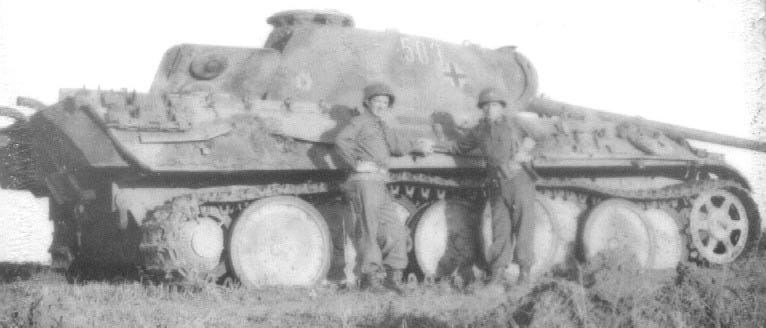
Things were quiet through the end of August for D Company’s “light” 17-ton Stuart tanks of the 712th Tank Battalion. They played a minor role in the closing of the Falaise Gap, one of the major events in the battalion’s history, but there are two entries in the battalion’s after action reports, one for B Company and one for C Company, both Sherman tank companies, that caught my eye.
August 20, 1944

August 21, 1944

The action picks up, not only for D Company but for the entire battalion, on Sept. 8, 1944, at about 3 in the morning. From the D Company journal:
8 September, 1944
At about 0300, an enemy column, consisting of about 5 Panther tanks and 6 half tracks, moved down a road between the Companies, circled the Bn. area, and was believed totally destroyed. The presence of this column was known, but to fire on it in the darkness would endanger our own troops. At about 1000, two enemy Panther tanks broke through our defenses and moved at full speed toward the Company and Bn. Headquarters Company area. Guns from several directions opened up on them and destroyed both tanks before they had done any harm. Five P.W.’s were taken, one of which stated that they were trying to get out rather than in.
It seemed like a no-brainer. Send the newly outfitted 106th Panzer Brigade, whose leaders had distinguished themselves on the Eastern front, to infiltrate the 90th Infantry Division lines and mount a surprise attack. If the Americans were anything like the Russians, where the tactic worked, the stunned Americans would scatter and flee. Due to a lack of reconnaissance, however, while traveling late at night, instead of going around and attacking from the rear, one of the Germans’ two armored columns drove into the 90th Infantry Division’s artillery command post, which was protected by tanks from the 712th, while the rest of the battalion was in the immediate vicinity. A sentry fired at the lead German tank and the Germans opened fire. For a brief period there was chaos and then things quieted down. The battle resumed at daylight.
Following is a German account from Panzerworld.com:
Panzer-Brigade 106 was made up in July 1944 from the remnants of the Panzer-Grenadier-Division “Feldhernhalle”, which was routed during the Russian offensive in June 1944, and shaped into condition near the eastern city of Danzig. Nobody less than the famous Colonel Dr. Franz Bäke [a dentist in civilian life] commanded this early unit of the succession of Panzer-Brigades. He was supported by experienced and highly decorated commanders, but the bulk of the troops consisted of inexperienced men and due to lack of fuel there had been little practice with the tanks. The training area could suggest deployment in the East, but in early September the brigade found itself as a reserve in the First Army sector in Lorraine. It was destined for the Lorraine counterattack against Patton’s Third Army later that month.
In the beginning of September the front line in Lorraine was stretching along the river Moselle from Nancy to Thionville. The Americans tried to establish bridgeheads over the river Moselle in weak sectors of the German defence to be able to advance to the industrial area in the Saar. Although the German First Army’s line of defence was thin it managed to fend off most of the American probing attempts to cross the river on 5th and 6th of September.
After this little success the commander of the First Army, Colonel-General Otto von Knobelsdorff, felt confident enough for a counterstroke on the stalled American forces. When the headquarters of Hitler gave away Panzer-Brigade 106 for 48 hours Knobelsdorff had his armoured fist with which he wanted to attack the exposed flank of the U.S. 90th Infantry Division north of Thionville. Knobelsdorff and Bäke were both seasoned officers who gained a lot of experience in Russia. They were confident that an armoured blow on the exposed flank and deep infiltration within American ranks would cause enough panic to make their units collapse and run, like the Russians would in similar circumstances.
Panzer-Brigade 106 with supporting infantry was send into action in the early morning of September 8th. There had been no beforehand reconnaissance, nor did the Germans know the exact whereabouts of the American positions. Bäke split up his force into two parallel armoured columns infiltrating into the Americans position without actually knowing where to strike. The western column began to spread out just as the Americans started to spot the German intruders. Instead of fleeing in confusion when confronted with this German night attack with tanks the Americans rallied and started to counter the threat.
Now the German forces were scattered in the countryside while the Americans began to rally their forces to strike back. The American infantry was armed with numerous kinds of anti-tank weapons and closely supported by divisional tanks and artillery. Scattered American tanks fired upon the column, while infantry was taking positions at road crossings to block German movement. Now the Germans were harassed by tanks and pounded with artillery.
At dawn the net of American forces around the western column started to get tight and escape was impossible. Bäke lost control over his units as they desperately tried to escape from the deadly trap which was closing around them. Villages and dense woods formed an excellent killing ground, because the Americans could knock out the mighty German tanks from close range. The eastern column tried to come to assistance of the western column, but this move was too late as the Americans were alerted and awaiting the attack. The eastern column was ambushed, suffering heavy casualties and the attack was soon broken off.
At the end of its first day of combat Panzer-Brigade 106 was routed and had lost most of its tanks and infantry in the process. At least 750 men were taken prisoner by the Americans and 21 tanks and tank destroyers of the initial 47 were permanently lost, next to more than 60 half-track carriers – it lost three-quarters of its combat effectiveness and actually ceased to exist as a unit capable of any offensive operations.
This case showed the weaknesses in the deployment and the tactics of the Panzer-Brigades. Firstly, the attack was carried out without proper reconnaissance or knowledge about the American positions. Secondly, the Panzer-Brigade was send into battle without clear objectives. These two mistakes were the result of the wrong assumption that a night attack with tanks would surprise the Americans and made them run. This major underestimation of the morale and fighting capabilities of the American forces proved fatal, because the Americans not only had the will but also the means to counter the attack. Besides these mistakes it was not a wise decision to commit inexperienced troops of an untested unit in a night attack against seasoned and well-organised troops.
Both A and C Companies lost tanks and had men killed and wounded in this battle, but I’ve written about those elsewhere, specifically in “Tanks for the Memories.”
The battle at Mairy was part of the Lorraine Campaign, as the 3rd Army probed for a spot to cross the Moselle River. Then General Patton’s tanks were stalled by the diversion of much-needed gas to Operation Market Garden, the airborne assault in Holland that launched on Sept. 17 and was portrayed in the movie “A Bridge too Far.”
During this period the tanks engaged in “indirect firing”; in other words, they were used as artillery as the Allies probed for a spot to cross the Moselle River.
9 September 1944
The Company remained in the assembly area during the day and performed necessary maintenance.
10 September 1944
The Company moved with the Bn. Hq. and Hq. Company, and Service Company to a new assembly area 1 mile N. of Avril. The Company closed at 1500. Map ref: GS/GS, 1, 100,000, Verdun sheet, 714-796
11 September 1944
The Company remained in the assembly area during the day as all around protection for the Bn. C.P., Hq. Company, and Service Company. Necessary maintenance was performed. Map. Ref: GS/GS, 1/100,000, Neunkirchen, 788-893.
12 September 1944
The Company with the Bn. Hq. moved at 0730 to a new assembly area at Angevillers, arriving at 0930. The Company set up all around security for the Bn. C.P., Hq. Company, and Service Company. Necessary maintenance was performed. Map Ref: GS/GS, 1/100,000, Neunkirchen, 788-893
13 September 1944
The Company remained in the assembly area during the day, continued its job of Bn. security, and performed maintenance.
14 September 1944
The 1st Platoon was attached to the 358th Infantry and the Company with the Bn. was alerted to move. This move started at 1530 and the unit closed into an assembly area 1 mile E. of Briey about 1700. The unit was moved again at 2130 to set up a defensive position E. of Marie aux Chenes, and to relieve troops already there. The Company arrived about 2300.
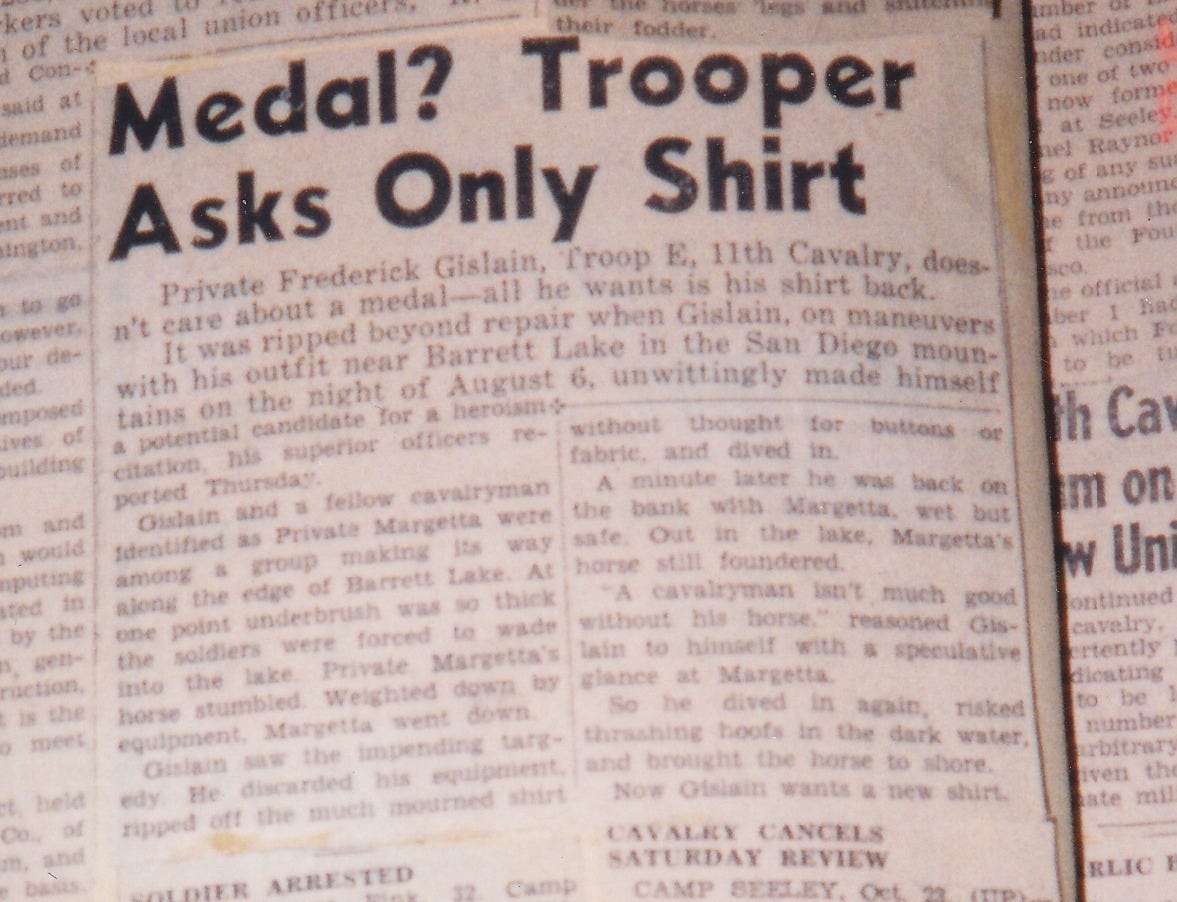
I was looking for this picture for Part 4 of this series, and as usual I found it while looking for something else today. It was a newspaper article in Dale Albee’s scrapbook.
“Private Frederick Gislain, Troop E, 11th Cavalry, doesn’t care about a medal — all he wants is his shirt back.
“It was ripped beyond repair when Gislain, on maneuvers with his outfit near Barrett Lake in the San Diego mountains on the night of August 6, unwittingly made himself a potential candidate for a heroism citation, his superior officers reported Thursday.
“Gislain and a fellow cavalryman identified as Private Margetta were among a group making its way along the edge of Barrett Lake. At one point underbrush was so thick the soldiers were forced to wade into the lake. Private Margetta’s horse stumbled. Weighted down by equipment, Margetta went down.
“Gislain saw the impending tragedy. He discarded his equipment, ripped off the much mourned shirt without thought for buttons or fabric, and dived in.
“A minute later he was back on the bank with Margetta, wet but safe. Out in the lake, Margetta’s horse still foundered.
“‘A cavalryman isn’t much good without his horse,’ reasoned Gislain to himself with a seculative glance at Margetta.
“So he dived in again, risked thrashing hoofs in the dark water, and brought the horse to shore.
“Now Gislain wants a new shirt.”
8 November 1944
The Battalion was alerted and moved from the area at Rochonvillers, France at 1800. Traveling conditions were bad due to the darkness, rain and a narrow curving road with soft mud shoulders. The Company arrived at Roussy-le-Bourg, France at 2145. Distance traveled was 11 miles.
9 November 1944
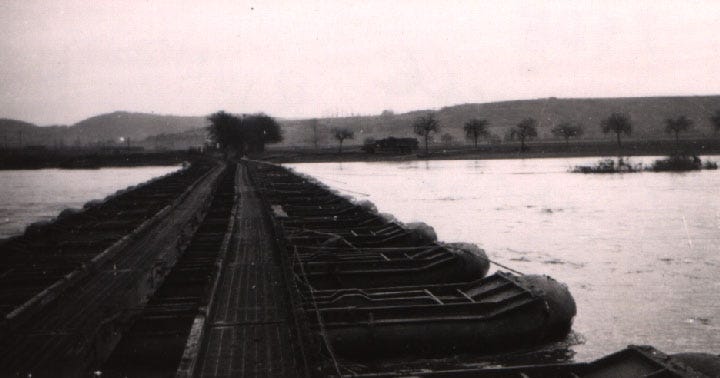
The Company remained in Roussy-le-Bourg awaiting further orders. Action was delayed by attempts made to cross the Moselle River and establish beach heads on the other side. The river was swollen due to the heavy rains in the past few days.
10 Nov. 1944
Situation same as the 9th.
20 November 1944
SUBJECT: Company Journal
To: Commanding Officer, 712th Tank Battalion
The following is a daily journal of this organization from 11 November 1944 to 20 November 1944
11 November 1944
The Company remained in Roussy-le-Bourg, France, awaiting further orders.
12 November 1944
No change in the situation
13 November 1944
The Company was alerted to move and the 18 tanks, the C.O. peep, and the maintenance peep cleared the area at 1800. The balance of the Company’s vehicles, the kitchen truck, half-track, platoon peep, and the C.P. peep joined the Battalion trains and left at 1845. It was raining, was a bit foggy, and the roads were narrow with curves and muddy shoulders that would bog down any vehicles that got off of the hard surface. Progress was necessarily slow. The Moselle River was reached at 1955 and the crossing was completed by the 18 tanks and 2-1/4 ton peeps by 2015. These vehicles closed into Basse-Ham, France around 2330. Distance traveled was 11 miles.
14 November 1944
The trains were held up by priorities of other units and didn’t cross the Moselle River until 0315. They arrived in Basse-Ham, France at 1015. Orders were received the night of the 13th to combine our Company and the 90th Division Rcn. Troop to reconnoiter to the S. of Basse-Ham and to establish contact to the 95th Infantry Division bridgehead at Thionville, France. The 1st, 2nd and 3rd Platoons were attached to the respective Platoons of the 90th Division Rcn. Troop. At 0700 the 1st group started reconnaissance toward Thionville. The 2nd group started reconnaissance on the left via Valmestroff toward Kuntzig. The 3rd group started reconnaissance toward Haute-Ham. The 1st group made contact with the 95th Division bridgehead in the vicinity of Basse-Yutz at 0820, thus clearing a route for the 10th Armored Division to come through after the completion of the bridge at Thionville. The 3rd group found Haute-Ham cleared of the enemy and continued S.E. towards Kuntzig. This group and the 2nd group went through the woods just S. of Basse-Ham, through mine fields and both groups arrived in the vicinity of Kuntzig and took the village around 1400. The 2nd group established contact with the 358th Inf. Regt. approximately 2 kilometers E of Kuntzig. The town was outposted by the 2nd group and about 1900 a PW was taken at a bridge in Kuntzig. The 1st group set up a reconnaissance screen along the railroad from Basse-Yutz to the vicinity of Kuntzig. The 3rd group was ordered to push on through Kuntzig towards Stuckange. On the southern outskirts of Kuntzig heavy mine fields were encountered. This group attempted to swing west and then south and again encountered mine fields. While trying to get through this field the Rcn. platoon Sgt. stepped on an A.P. [anti-personnel] mine and lost a foot. The Rcn. platoon leader, while trying to evacuate him stepped on another A.P. mine and lost his foot. At this time, Lt. Coe, the tank platoon leader, and a Rcn. platoon driver reached the two men and started back with the platoon Sgt. The driver set off another A.P. mine, received a serious leg injury, further injured the Sgt. they were carrying, and injured Lt. Coe’s left hand. Lt. Coe’s wound was severe but did not appear to be serious. He was evacuated. This accident happened about 1630 so this group was pulled back to the railroad for the night. At this time our mission for maintaining contact with the 95th Inf. Div. on our right and the 358th Inf. Regt. on our left was being carried out and a close reconnaissance screen between these two units which was the Division’s right flank was established. No enemy activity other than enemy artillery was reported during the night. The headquarters platoon had, in the meantime, become comfortably situated in the town of Besse-Ham.
Out of gas and low on ammunition while needed supplies were diverted to Operation Market Garden, most of the 712th Tank Battalion spent six weeks on the west side of the Moselle River opposite the daunting forts of the Maginot Line. Most of the forts had been all but abandoned but were reenforced by the time the 90th Infantry Division crossed in force. Due to the heavy rains, the river was a mile wide when the infantry crossed in assault boats while a pontoon bridge was constructed, and the infantry was on the verge of losing their bridgehead when the Shermans of the 712th finally made it across.
“That was a miserable damn deal,” Dale Abee said. “I’ll say this. I don’t care if it gets back to Montgomery, that glory-happy bastard. I still think that the reason we ran out of gas and ammunition down there was so they could send it up to him and he could run his tanks down the dike. Because if they let Patton go, we had the Germans on the run. Jesus, they were down to where they was using horses and buggies, or horses and wagons. Just any old thing they could. And the Germans, the thing about them, if you let them dig in, they were the damnedest fighters to dig out. If you could keep them on the run, then they couldn’t get oriented or regroup. And Patton sure had them. Boy, he had them right by the gitchy goomie. And they stopped us down there, and we like to never got back into Metz.”
15 November 1944
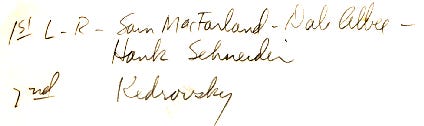
The 2nd and 3rd groups maintained the reconnaissance screen while the 1st group attempted to move S. to Stuckange. Again heavy mine fields were encountered everywhere they went. Due to these mines and enemy artillery, Stuckange had still not been entered by sundown by our troops after attempting to do so from five different routes. The 1st and 3rd Platoons were withdrawn to Basse-Ham and into Division reserve at 1600, while the 2nd group continued to outpost Kuntzig. The 3rd Platoon had been placed under the command of Tec. Sgt. Dale S. Albee. S/Sgt. Reynolds, injured July 27, returned to duty with the Company.
16 November 1944
The Company, less the 2nd Platoon, remained in Division reserve at Basse-Ham. The 2nd Platoon outposted Kuntzig until early afternoon when they moved through Imeldange, Geunange, into Haute Geunange. Later in the afternoon a six man patrol went to Reinange, about 2 kilometers S. from Haute-Geunange, and captured 47 prisoners. Haute-Geunange was outposted for that night.
17 November 1944
The Company less the 2nd Platoon moved at 1145 from Basse-Ham and closed in at the new bivouac area near Illange, France at 1215. The distance traveled was 5 miles. The 2nd section of the 2nd Platoon of tanks and one section of the 2nd Platoon of the 90th Division Rcn. Troop went to Rurange. The tanks supported the Rcn. on the road from Rurange to Metzeresche while the Rcn. investigated a road block and dug-in position at (929-769). They then turned back and the town of Rurange was outposted for the balance of the day and that night. The 1st section of tanks and a section of Rcn. went to Flevy, France and contacted the 95th Division Rcn. During the day and night they received enemy shelling. A prisoner was captured and the information received from him was turned over to the 95th Division Rcn. A map and overlay of the area was found and turned over to the 90th Division Rcn. The town of Flevy was outposted for the night.
18 November 1944
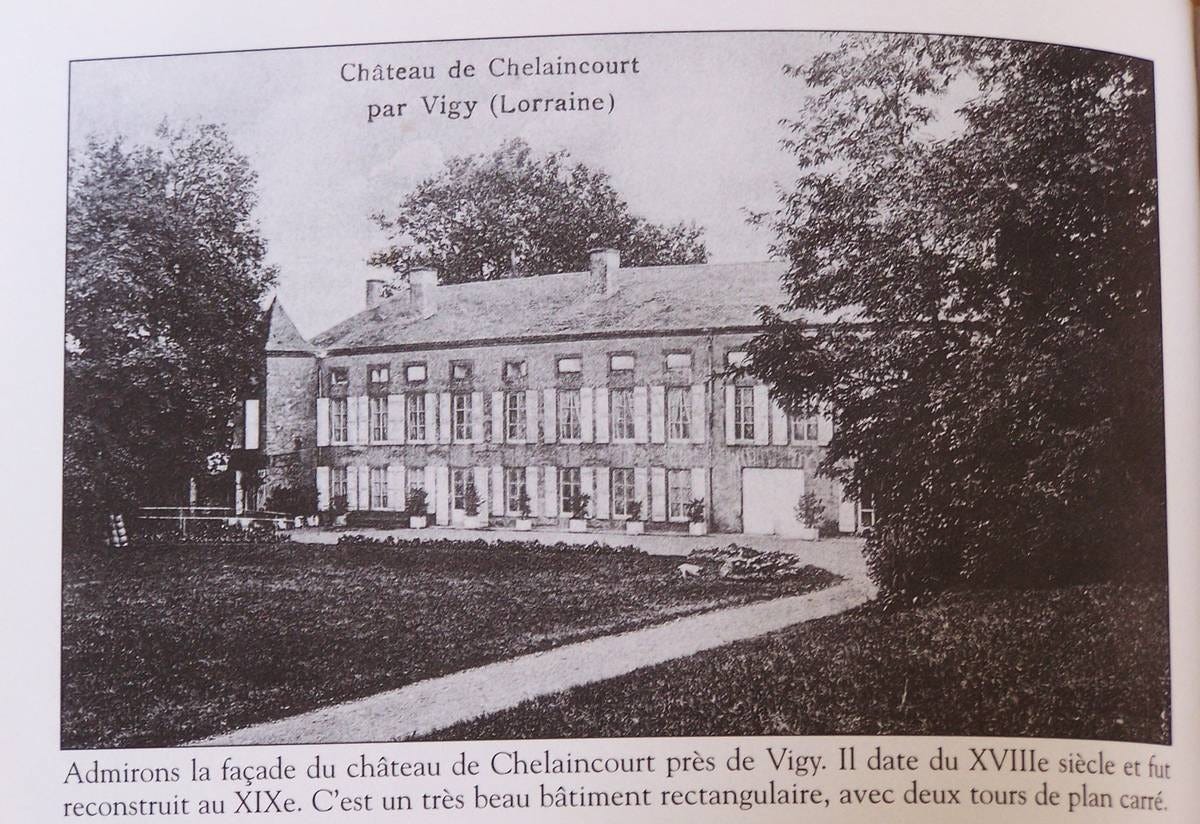
Early in the morning the group outposting Flevy captured a prisoner and turned him over to the 90th Division. The 2nd section of the 2nd Platoon and the attached section of the 90th Division Rcn. Troop moved from Rurange and joined the balance of the 2nd Group at Flevy. The mission was to continue reconnaissance to Mancy, through Hessange, to Vigy. On the road to Mancy, a road block was cleared by tying cables around the trees and towing them off of the road with tanks. Near Chelaincourt Chateau a German officer and private were captured. Replenishments were made in gas, water, and rations, and more prisoners were picked up at Chelaincourt Chateau. At Vigy more prisoners were picked up. While outposting Vigy orders were received to proceed into Avancy. As they moved into Avancy, an enemy horse drawn vehicular column was intercepted and shot up. A considerable number of prisoners were taken. The wounded Germans were evacuated. The town was outposted and at 1800 two German trucks came down the road and were knocked out. Two prisoners were taken and two were killed. At 2400 a German vehicle was knocked out at the crossroads while trying to escape. This vehicle had an American Medic from the 95th Infantry Division a PW of the Germans as of 1900 that day. The four Germans in the vehicle were wounded and captured. The American Medic was unharmed. The balance of the Company made a blackout march from the bivouac area bnear Illange to Bettelainville, France, a disance of 11 miles.
19 November 1944
At 0130 a coupe and an ammunition truck were knocked out by the 2nd Platoon. The ammunition truck was towing a 20 mm. anti-tank gun. The truck was set on fire. Eighteen EM [enlisted men] and a Captain were captured and five others were killed. At 0630 an approaching convoy was heard and a flare was used to provide enough light to spot the vehicles. The convoy of 5 trucks were knocked out. The personnel scattered and escaped; two were killed. The captured anti-tank gun was set up and fired at the trucks, to further destroy them. Bazookas were captured in one of the trucks. At 0930 the 2nd group moved out to the crossroads approximately 1000 yards N.E. of Retonfey and joined with the 735th tank Battalion, thus closing the Metz Gap. The 2nd group then moved into Rentonfey and outposted it for the rest of the day and that night. The 1st Platoon moved at 0830 under Task Force Kedrovsky and set up road blocks at Avancy. The balance of the Company moved to Vry. The 3rd Platoon set up road blocks at Vry. In the afternoon the 1st Platoon was returned to Company control. Around 2330 machine gun fire from another company in the Battalion wounded and captured 3 out of 6 Germans while trying to escape.
Next: This one is personal
Dad’s mount Cy horse blanket shows 11th Cavalry Troop B dad’s initials AS
I believe he mentioned something about that, if I got drafted for Vietnam “don’t volunteer for anything”